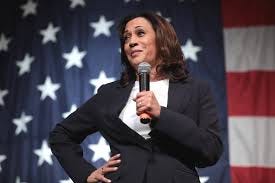
Uncover the truth behind the pictures on our internet!
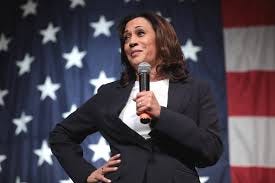

Introduction

The rapid advancement of artificial intelligence (AI) has led to the creation of powerful tools capable of generating highly realistic images. While this technology offers exciting possibilities, it also raises significant concerns about its potential impact on society. This article will explore the implications of AI-generated images, focusing on their effect on public perception, trust, and the future of our information landscape.
Body Paragraph 1: The Power of AI in Image Manipulation
AI algorithms can now generate images that are virtually indistinguishable from photographs, raising serious concerns about the potential for misinformation and manipulation. Deepfakes, for instance, are AI-generated videos or images that can convincingly portray individuals saying or doing things they never did.
Body Paragraph 2: The Erosion of Trust
The ability to create and manipulate images using AI has profound implications for public perception and trust. Misinformation spread through AI-generated content can undermine trust in institutions, individuals, and the media. Additionally, the difficulty in distinguishing real from fake images can make it challenging to verify information and make informed decisions.
Body Paragraph 3: Ethical Considerations and Future Implications
The widespread use of AI-generated images raises ethical concerns. These include the potential for misuse, such as deepfakes used for blackmail or harassment, and the impact on intellectual property rights. Furthermore, the ethical implications of using AI to manipulate public opinion and influence elections must be carefully considered.
The future of information is likely to be shaped by AI-generated content. As technology continues to advance, it is essential to develop strategies to mitigate the risks associated with AI-generated images and ensure that they are used responsibly and ethically.
Body Paragraph 4: Data and Statistics
To illustrate the impact of AI-generated images, consider the following data:
- Growth of AI Image Generation Market: According to a report by Grand View Research, the global AI image generation market is expected to reach $11.4 billion by 2027, growing at a CAGR of 28.3% during the forecast period (2022–2027).
- Prevalence of Deepfakes: A study by Deeptrace Labs found that the number of deepfake videos online increased by 900% from 2017 to 2019.
- Impact on Public Opinion: A survey by Pew Research Center found that 69% of Americans are concerned about the potential for deepfakes to be used to spread misinformation.
- Detection Challenges: A study by the Massachusetts Institute of Technology (MIT) found that even state-of-the-art deepfake detection models can be fooled by sophisticated techniques.
- Legal and Regulatory Challenges: The rapid development of AI-generated images has outpaced the development of legal and regulatory frameworks. This creates challenges in addressing issues such as copyright infringement, defamation, and privacy violations.
Deepening the Technical Discussion: AI Techniques for Image Generation
Generative Adversarial Networks (GANs)
GANs are a class of machine learning models that consist of two neural networks: a generator and a discriminator. The generator creates new data instances, while the discriminator evaluates their authenticity. The two networks compete in a game-theoretic framework, with the generator trying to fool the discriminator and the discriminator trying to accurately distinguish real and fake data.
How GANs work:
- The generator creates a new data instance based on random noise.
- The discriminator evaluates the generated instance and determines whether it’s real or fake.
- The generator and discriminator update their parameters based on the discriminator’s feedback.
- This process is repeated iteratively until the generator can produce highly realistic data instances that are difficult for the discriminator to distinguish from real ones.
Applications in image generation:
- Generating photorealistic images of people, objects, and scenes.
- Creating new artistic styles or images inspired by existing works.
- Enhancing image resolution or quality.
- Generating synthetic data for training other AI models.
Variational Autoencoders (VAEs)
VAEs are a type of generative model that uses probabilistic modeling to learn a latent representation of the data. They consist of an encoder network that maps input data to a latent space and a decoder network that reconstructs the input data from the latent representation.
How VAEs work:
- The encoder network maps the input data to a latent space, which is typically a lower-dimensional representation.
- The decoder network generates a new data instance based on the latent representation.
- The VAE is trained to minimize the reconstruction error between the input data and the generated data, while also ensuring that the latent representation is a meaningful probabilistic distribution.
Applications in image generation:
- Generating images with specific properties or attributes, such as a particular style or theme.
- Interpolating between images to create new, intermediate images.
- Generating images from text descriptions or other forms of input.
Other Techniques:
- Autoregressive Models: These models generate images one pixel at a time, conditioning the generation of each pixel on the previously generated pixels.
- Flow-Based Models: These models use invertible transformations to map between the data space and a latent space, allowing for efficient sampling and density estimation.
- Neural Style Transfer: This technique combines the content of one image with the style of another image to create new, stylized images.
- GFlowNets: A Novel Approach to Generative Modeling
GFlowNets are a class of generative models introduced by Bengio et al. in 2018. Unlike traditional generative models like GANs and VAEs, GFlowNets are based on the framework of Markov decision processes (MDPs). This unique approach allows them to efficiently sample from complex distributions and learn the underlying structure of the data.
A GFlowNet is a neural network that approximates the Q-function of an MDP. It is trained to predict the expected future reward for any given state-action pair.
How GFlowNets Work
- Define an MDP: The first step is to define an MDP that corresponds to the data distribution we want to model. The states and actions in this MDP typically represent the elements of the data space.
- Train the GFlowNet: The GFlowNet is trained using a policy gradient method, where the policy is the probability of taking a particular action from a given state. The goal is to maximize the expected future reward.
- Sample from the Model: Once the GFlowNet is trained, it can be used to sample from the target distribution. This is done by starting from a random state and iteratively taking actions based on the GFlowNet’s predictions. The sequence of states generated in this way forms a sample from the distribution.
Advantages of GFlowNets
- Efficiency: GFlowNets can often be more efficient than traditional generative models, especially for high-dimensional data.
- Flexibility: They can be applied to a wide range of tasks, including image generation, text generation, and molecular design.
- Interpretability: GFlowNets can provide insights into the underlying structure of the data through the learned Q-function.
Applications
- Image generation: GFlowNets have been used to generate high-quality images, including realistic faces and natural scenes.
- Molecular design: They can be used to generate new molecules with desired properties, such as drug candidates.
- Text generation: GFlowNets can generate coherent and meaningful text, including stories, poems, and code.
In summary, GFlowNets offer a promising alternative to traditional generative models, providing a flexible and efficient framework for learning complex data distributions. Their unique approach based on MDPs allows them to capture the underlying structure of the data and generate high-quality samples.
By understanding these techniques, we can better appreciate the capabilities and limitations of AI-generated images and the potential impact they may have on society.
Conclusion
The rise of AI-generated images marks a pivotal moment in human history, challenging our very perception of reality. As the technology continues to advance, we must navigate a future where truth and falsehood can be indistinguishable. The implications are profound, extending beyond the realm of digital manipulation to impact politics, justice, and even our personal relationships.
To safeguard our society, we must invest in research and development to create robust detection tools, foster international cooperation to establish ethical guidelines, and educate the public about the dangers of misinformation. Only by understanding the challenges posed by AI-generated images can we harness their potential for good and protect the integrity of our digital world.
Gap Needing to Be Filled:
One significant gap that needs to be filled is the development of robust and accurate tools for detecting AI-generated images. While some progress has been made, current detection methods are still imperfect and can be easily fooled by sophisticated deepfakes.
Purpose:
The purpose of this article is to raise awareness about the implications of AI-generated images and to encourage individuals and organizations to take action to address the challenges associated with this technology.
In conclusion, the rise of AI-generated images presents a significant challenge to our society. It is imperative that we take proactive steps to mitigate the risks associated with this technology. By investing in research and development, promoting education and awareness, and implementing appropriate regulations, we can ensure that AI-generated images are used for the benefit of society, rather than to harm it. Let us work together to shape a future where AI is a force for good.
Works Cited:
[1] B.Miller, AI Image Generation Explained: Techniques, Applications, and Limitations (2022) [2] K. Sukhanova, AI Image Generator Market Statistics — What Will 2024 Bring? (2024) [3] Trump Shares AI Photo of Kamala Harris — What It Means for the US Election (2024)In Plain English 🚀
Thank you for being a part of the In Plain English community! Before you go:
- Be sure to clap and follow the writer ️👏️️
- Follow us: X | LinkedIn | YouTube | Discord | Newsletter
- Visit our other platforms: CoFeed | Differ
- More content at PlainEnglish.io
What are the implications of AI-generated images? was originally published in Artificial Intelligence in Plain English on Medium, where people are continuing the conversation by highlighting and responding to this story.
* This article was originally published here

