In the rapidly evolving landscape of artificial intelligence, tools like ChatGPT are revolutionizing various professional fields, including the legal sector. For medical malpractice lawyers, leveraging ChatGPT can enhance efficiency, support case preparation, and provide insightful analyses. This article explores how medical malpractice lawyers can effectively use ChatGPT prompts to streamline their practice and deliver better outcomes for their clients.
ChatGPT Prompts for Medical malpractice lawyer
Understanding Medical Malpractice Law
Before diving into the specifics of ChatGPT prompts, it’s essential to understand the complexities of medical malpractice law. Medical malpractice occurs when a healthcare professional deviates from the standard of care, causing harm to a patient. Cases often involve intricate medical details, extensive documentation, and expert testimonies, making them particularly challenging.
Benefits of ChatGPT for Medical Malpractice Lawyers
- Efficiency in Research and Documentation: ChatGPT can assist lawyers in quickly gathering and summarizing vast amounts of medical literature, case laws, and previous judgments relevant to their cases. This accelerates the research process and ensures comprehensive coverage of all necessary information.
- Drafting Legal Documents: Crafting pleadings, motions, and briefs can be time-consuming. ChatGPT can generate drafts of these documents, allowing lawyers to focus on refining and tailoring them to specific case requirements.
- Client Communication: Effective communication with clients is crucial in medical malpractice cases. ChatGPT can help draft clear and concise emails, letters, and updates, ensuring clients are well-informed and engaged throughout the process.
- Scenario Simulation: ChatGPT can simulate different case scenarios, helping lawyers anticipate potential challenges and develop robust strategies. By posing hypothetical questions, lawyers can explore various outcomes and prepare more thoroughly.
Essential ChatGPT Prompts for Medical Malpractice Lawyers
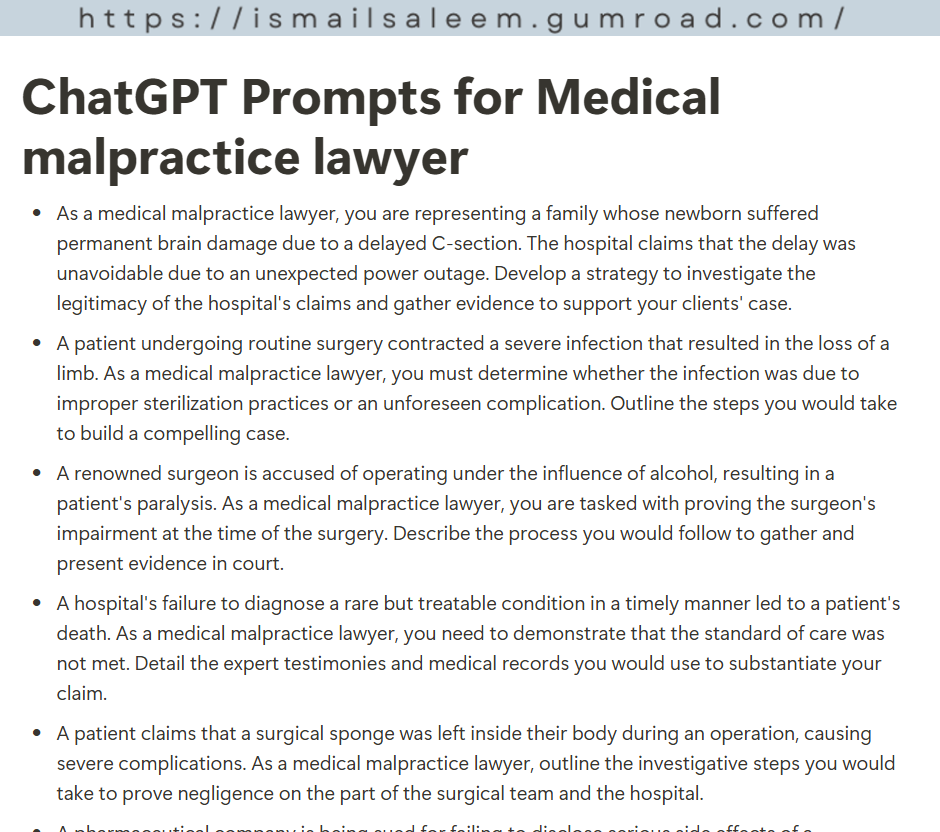
To maximize the benefits of ChatGPT, it’s vital to use well-structured prompts. Here are some examples:
Research and Case Analysis:
- “Provide a summary of recent medical malpractice cases involving surgical errors.”
- “List the common defenses used by healthcare providers in medical malpractice lawsuits.”
- “Analyze the impact of recent changes in medical malpractice law in [specific jurisdiction].”
Drafting Legal Documents:
- “Draft a complaint for a medical malpractice case involving misdiagnosis.”
- “Create a motion to dismiss for a medical malpractice case citing lack of evidence.”
- “Generate a sample demand letter for a medical malpractice claim.”
Client Communication:
- “Compose an email updating a client on the status of their medical malpractice case.”
- “Draft a letter explaining the next steps in a medical malpractice lawsuit.”
- “Write a script for a client consultation about the potential risks and benefits of pursuing a medical malpractice claim.”
Scenario Simulation:
- “Simulate a cross-examination of a medical expert witness in a malpractice trial.”
- “Generate potential questions for deposing a defendant doctor in a medical malpractice case.”
- “Outline a strategy for addressing a defense argument that the injury was pre-existing.”
ChatGPT Prompts for Medical malpractice lawyer
Best Practices for Using ChatGPT in Legal Practice
While ChatGPT offers significant advantages, it’s important to use it judiciously:
- Verification of Information: Always cross-check the information provided by ChatGPT with reliable sources. Legal accuracy is paramount.
- Customization: Tailor the AI-generated drafts to fit the specific context and nuances of each case. ChatGPT can provide a foundation, but human expertise is crucial for finalization.
- Confidentiality: Ensure that client confidentiality is maintained when using AI tools. Avoid inputting sensitive or identifiable client information into the AI prompts.
- Continuous Learning: Stay updated on the latest developments in AI technology and legal practice. Continuous learning will help you leverage ChatGPT more effectively and ethically.
Conclusion
The integration of ChatGPT into the practice of medical malpractice law holds great promise. By using well-crafted prompts, medical malpractice lawyers can enhance their research, documentation, client communication, and strategic planning. As AI technology continues to evolve, those who embrace and adeptly utilize these tools will be better positioned to navigate the complexities of medical malpractice cases and achieve favorable outcomes for their clients.
- ChatGPT Prompts for Medical malpractice lawyer
- ChatGPT Prompts for Professionals – Your Source for Expert Guidance
- Subscribe to Ismail Store on Gumroad
- Solve Programming Problems (ChatGPT, Programming)
In Plain English 🚀
Thank you for being a part of the In Plain English community! Before you go:
- Be sure to clap and follow the writer ️👏️️
- Follow us: X | LinkedIn | YouTube | Discord | Newsletter
- Visit our other platforms: CoFeed | Differ
- More content at PlainEnglish.io
Unlocking the Potential of ChatGPT Prompts for Medical Malpractice Lawyers was originally published in Artificial Intelligence in Plain English on Medium, where people are continuing the conversation by highlighting and responding to this story.
* This article was originally published here
