
These are children. Cancer is a real issue. Here’s how we can save thousands. At the center of it all: data science.

Introduction
As a neuro/AI enthusiast, I’m deeply passionate about the potential for artificial intelligence (AI) to revolutionize healthcare, particularly in the fight against childhood cancer. Growing up, I would hear stories of such cases. I have always wanted to help, in whatever way I can. I believe I have the answer: NLP. And data science is a core piece of NLP and AI. There are so many huge reasons for this! I will be diving into this, along with AI. This is an issue that demands urgent attention, yet often falls short of the spotlight it deserves. My GOAL is to raise significant awareness in this underserved area. Let’s start with 10 people. This number is realistic, and it will keep growing. Maybe we’ll reach 1000 someday. Whoever is reading this, I want you guys to help us all reach for the ceiling. I want you to virtually take my hand and embark on this journey towards awareness. To prove my point that we can indeed get there, I have gathered data and a success story. This article delves into how NLP could be a game-changer in analyzing complex medical records, predicting treatment outcomes, and enhancing patient communication specifically for young cancer patients.
Childhood cancer is a complex and devastating disease that affects thousands of young lives each year. Despite advancements in treatment, many challenges remain in providing effective and personalized care. However, AI offers innovative solutions that could transform this landscape.
Today, I want to share the inspiring story of a young girl named Mabry. Her family described her as a “brave and beautiful girl” who faced and overcame acute lymphoblastic leukemia, the most common form of childhood cancer. Mabry’s journey is a beacon of hope, but there are countless other children still in need of better care and treatment options.
As we navigate the daily challenges of life — be it mental health struggles or physical illnesses — it’s crucial that we find the strength to overcome these fearsome obstacles. And in the case of childhood cancer, NLP may hold the key to unlocking more positive outcomes for these young, vulnerable patients.
In the sections that follow, I’ll explore how AI and NLP can harness the power to save lives, while also addressing potential pitfalls and ethical considerations. My goal is to inspire action and drive meaningful change in an area that deserves far greater attention and resources.
I have extensive knowledge about various different cancers, and I want to someday use my knowledge to help these kids. I also have knowledge on areas of AI. One of these: NLP (natural language processing), has not been used extensively in cancer treatment. This represents a significant advancement. It can be used to analyze clinical notes and patient records. It is astonishing how cancer treatment facilities have not used this yet. This is the perspective I bring to the table.
We will touch on Mabry’s situation, how AI (and NLP) can help, and lastly, how AI can be counter-productive.
Mabry’s Story: A Beacon of Hope and Opportunity.
At the mere age of 2, Mabry was diagnosed with acute lymphoblastic leukemia, the most common form of childhood cancer, in 2014. People donated thousands of dollars to save her life. She was just a normal kid before the terrible news hit her family. Thanks to extensive chemotherapy and support, Mabry achieved remission. AI is preventing these young souls from dying. From leaving this world without leaving a mark.
Each day, 47 children are diagnosed with cancer in the United States, which means more than 17,000 children in the U.S. are diagnosed each year. Each year in the U.S. there are an estimated 15,780 children between the ages of birth and 19 years of age who are diagnosed with cancer. Over 100 genetic mutations have been linked to childhood cancers, and AI is helping researchers identify new targets for treatment. Mabry is one of these kids. To illustrate this with a dataset:
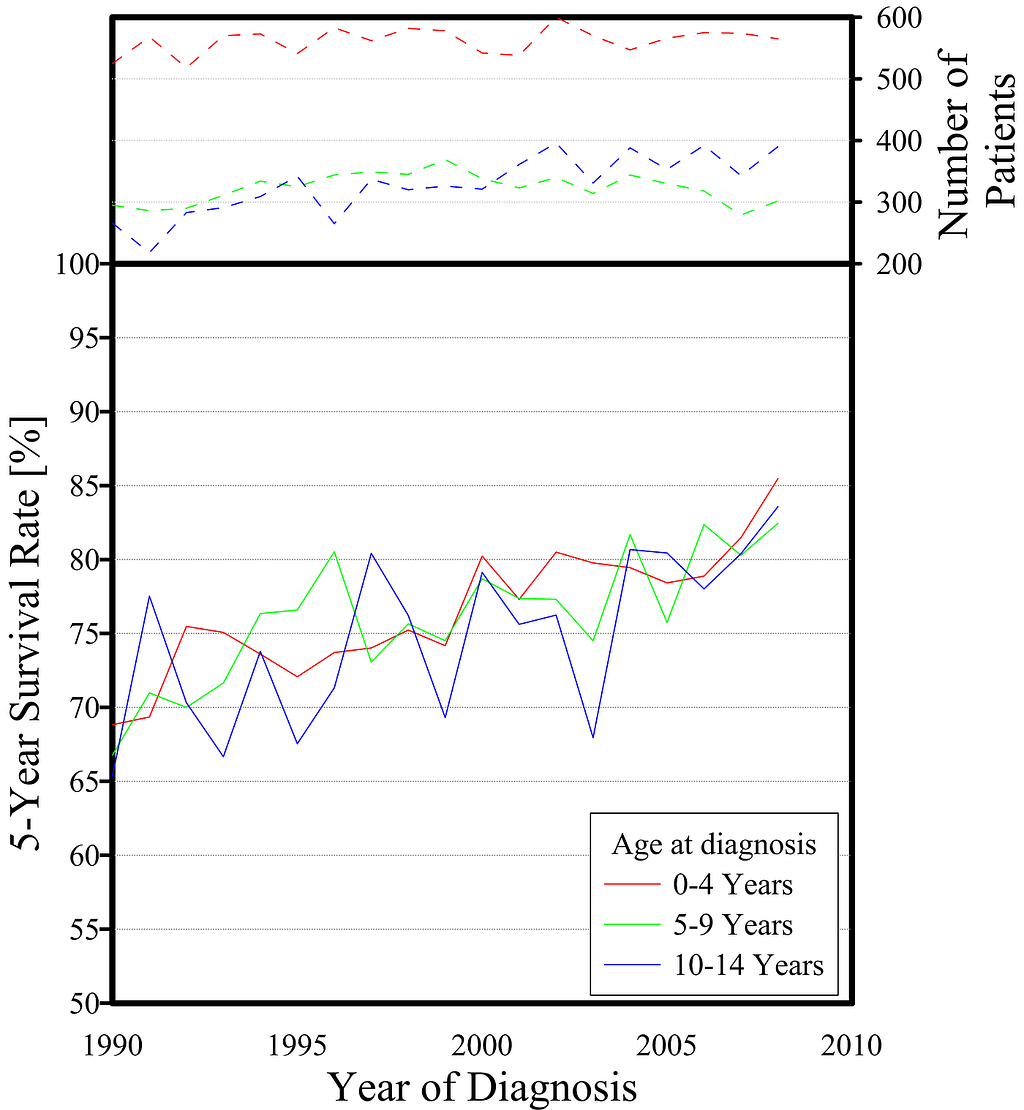
The dataset means that the numbers are growing. The numbers should be slowing down!
Applications of AI and NLP
Mabry’s recovery was a beacon of hope, but many children still face challenges that require more advanced solutions. These numbers highlight the urgency of the situation. AI can help save countless children from leaving this world every year! AI can analyze microscope images with up to 95% accuracy. In some cases, AI has outperformed expert doctors in diagnosing blood-related diseases. This shows AI’s prowess in fighting off cancer. AI-powered image analysis can detect tumors hidden in complex scans, allowing for earlier intervention and potentially life-saving treatments. By identifying patterns and correlations that might be missed by human researchers, AI can help (learn more with the links):
- Discover new drug targets: AI algorithms has been used to analyze genetic data to identify specific targets for cancer treatment.
- Predict treatment outcomes: By analyzing patient data, AI models has been used to help predict which treatments are most likely to be effective for individual patients.
- Optimize clinical trials: AI has been used to design more efficient and effective clinical trials, reducing the time it takes to develop new therapies.
AI is also being used to improve cancer diagnosis and treatment. For example:
- Image analysis: AI-powered algorithms has been used to analyze medical images, such as X-rays, CT scans, and MRIs, to detect tumors and other abnormalities with greater accuracy than human experts.
- Personalized treatment: By analyzing a patient’s unique genetic makeup and medical history, AI has been used to identify the most effective treatment options.
- Robotic surgery: AI-powered robotic systems has been used to perform minimally invasive surgeries with greater precision and accuracy than traditional methods.
How NLP Can Help
Natural Language Processing (NLP) transforms human language into structured data that AI systems can analyze. In cancer care, NLP aids in:
- Processing Clinical Notes: NLP can extract valuable insights from clinical records and pathology reports, improving treatment planning.
- Predicting Outcomes: By analyzing historical data, NLP can help predict patient survival rates and potential complications.
- Enhancing Communication: NLP tools can facilitate better communication between healthcare providers and patients by streamlining data access and interpretation.
All this data points to the fact that AI and NLP can really help. This approach is novel because before, these kids had a much bigger chance of dying.
These children deserve a greater opportunity for a fulfilling life, free from the despair that often accompanies such a diagnosis.
Cancer leads to so many mental health disorders, and we have to stop it in its tracks now! In the “era of technology”, AI is at the reins of it all, producing change on a global (and familial) front. They should be using NLP as well, because it could really assist on so many fronts. Mabry’s family went through so much anxiety, and they shouldn’t have to. If AI and NLP can help with cancer, there should be no reason why they can’t subsequently help with the mental health issues caused by cancer.
Challenges and Ethical Considerations
While AI and NLP offer transformative potential, they also present challenges:
- Bias and Fairness: AI systems has been used to inherit biases present in training data, which may lead to unequal treatment outcomes.
- Data Privacy: Handling sensitive patient data requires stringent privacy measures to avoid misuse.
- Integration Issues: Incorporating AI solutions into existing healthcare frameworks can be complex and costly.
To effectively help children like Mabry, we need to improve AI and implement NLP properly.
Conclusion
Today, if you see Mabry’s family, you’ll likely notice their smiles. It means we can recover from this tragic, dystopian reality we call cancer. We can recover from tough years that have thrown us into a seemingly never-ending spiral of depression and regret. Just look at other areas: it has helped with mental health in the military, in prisons, and so much more. This demonstrates its potential to drive significant change in humanity. I know it is heartbreaking to hear about this, but the fact that we have recovered from it means we as a community have the strength and resilience to recover from these issues for good.
As you can see, data science is at the reins, commanding AI and NLP to bring forth positive change that can transform the lives of so may children, like Mabry.
I am writing this not only to inform you but also to inspire action. Please, go out there and donate to your local child cancer foundation such as St. Jude, to name one. It’s as simple as going to their website and clicking the “donate” button. Raise awareness for this cause. AI is so useful.
To realize this potential, we must:
- Invest in Research: Increase funding for research and development of AI/NLP applications in cancer care.
- Foster Collaboration: Encourage collaboration between researchers, clinicians, data scientists, and policymakers.
- Address Ethical Concerns: Ensure AI systems are developed and deployed ethically, prioritizing patient privacy and fairness.
- Support Data Sharing: Facilitate the sharing of de-identified patient data to fuel research and development.
- Educate Healthcare Professionals: Provide training and education to equip healthcare professionals with the skills to effectively use AI/NLP tools.
It will help companies develop AI and NLP a lot more efficiently. And again, data science is needed for all of this. Just look at the data I gathered! Help kids like Mabry be given a chance at living the life we all take for granted. AI can give parents all around the world the strength. The strength to fight. Because, she recovered. So why can’t we?
Thank you for reading, I hope I have brought this to your attention.
With hope,
Ethics4All.
Sources:
[1] A. M. Sebastian and D. Peter, Artificial Intelligence in Cancer Research: Trends, Challenges and Future Directions (2022) [2] S. Fielding, 50 inspiring quotes about change (2023) [3] K. Stewart, The ethical dilemmas of AI (2024), USC Annenberg Relevance ReportIn Plain English 🚀
Thank you for being a part of the In Plain English community! Before you go:
- Be sure to clap and follow the writer ️👏️️
- Follow us: X | LinkedIn | YouTube | Discord | Newsletter
- Visit our other platforms: CoFeed | Differ
- More content at PlainEnglish.io
AI’s Promise in Child Cancer was originally published in Artificial Intelligence in Plain English on Medium, where people are continuing the conversation by highlighting and responding to this story.
* This article was originally published here


